Why 3D Visualisation Matters in Architecture
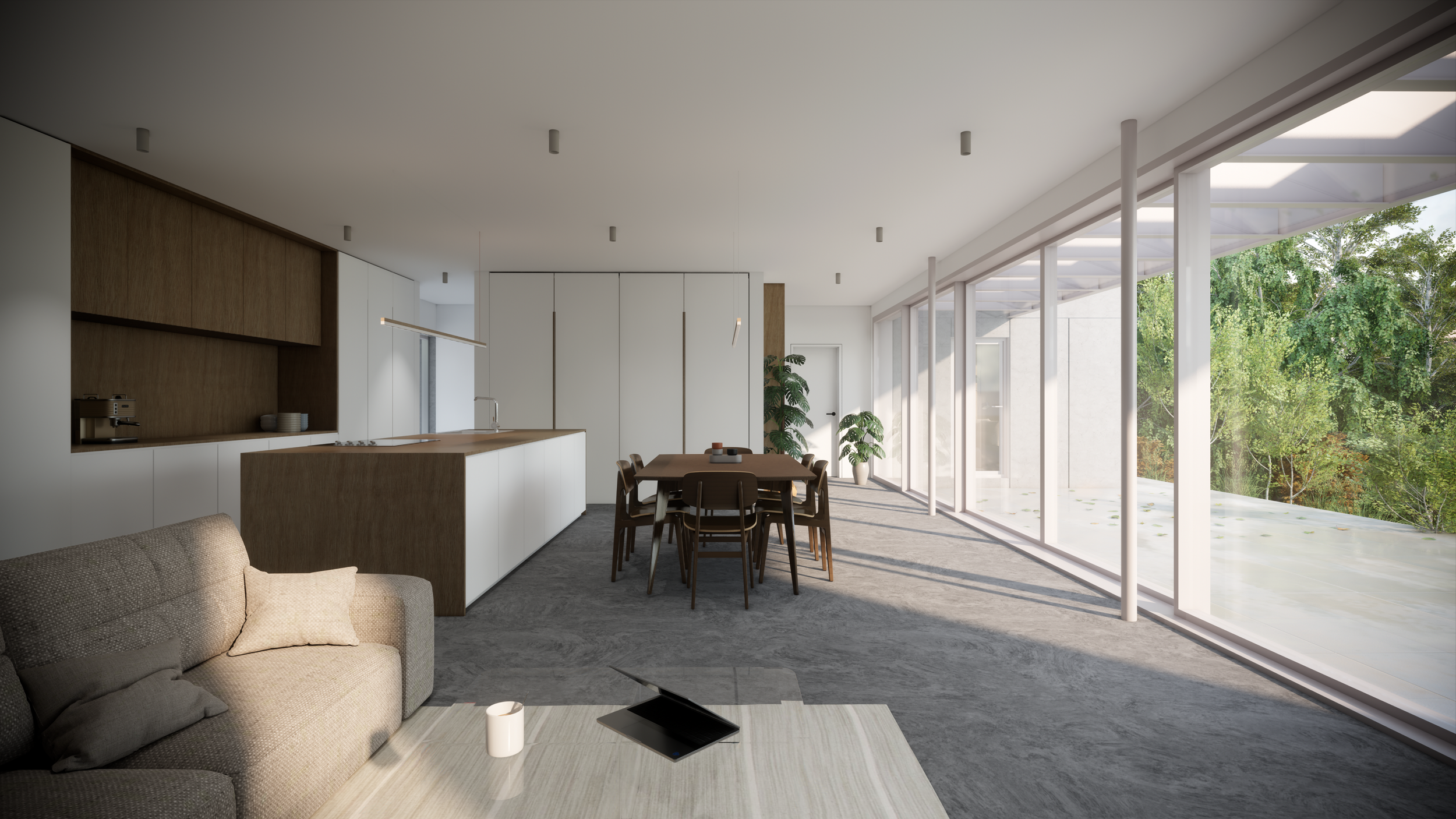
3D Visualisation in Architecture | Real-Time Design at SOUP Architects
Discover why 3D visualisation matters in architecture. Learn how real-time rendering helps SOUP Architects refine design decisions and create compelling marketing visuals.
Architecture is experienced in three dimensions, but most projects still begin as two-dimensional information: plans, elevations, sections and technical schedules. These drawings remain essential, yet they can be difficult for non-designers to interpret with confidence. This is where 3D visualisation becomes genuinely valuable, not as decoration, but as a practical tool for clearer decisions, smoother approvals, and better outcomes.
At its best, visualisation bridges the gap between design intent and lived experience. It helps clients understand scale, light, materials, and spatial relationships early enough to influence the design, when change is still efficient.
Clarity that drawings cannot always provide
Even experienced clients can find it challenging to translate a plan into a feeling. How tall will the room feel? How will daylight move through the space? Will a proposed extension sit comfortably alongside the existing building? Is a new opening well-proportioned, or simply compliant?
A well-built 3D model and carefully composed views answer these questions quickly. They reduce uncertainty and replace guesswork with shared understanding. This is particularly useful where decisions are subtle: facade rhythm, massing, roof forms, and the balance between old and new in sensitive settings.
The last decade of rapid change
Over the past ten years, rendering technology has advanced at speed. Visualisation has shifted from slower, specialist workflows to something that can be integrated into everyday design development.
Real-time rendering now allows high-quality views to be generated instantly from live models, making design conversations more dynamic. Materials have become more accurate, lighting more convincing, and modern graphics hardware has significantly reduced the time required to produce credible, photoreal results. Improvements in workflow integration also mean visuals can stay aligned with evolving design information, rather than becoming a separate, disconnected exercise.
The benefit is not simply better imagery. It is a more responsive design process, where visual feedback helps refine architecture as it is being developed.
How SOUP Architects uses real-time visualisation
At SOUP Architects, visualisation is a core design tool, not a final-stage add-on. We use the latest versions of real-time engines so clients can engage with proposals in a direct, intuitive way. This enables live option testing, such as exploring materials, adjusting proportions, or comparing fenestration arrangements. It also supports walkthroughs and key viewpoints to understand routes, thresholds, and sightlines. Context checks become clearer too, helping clients see how a building will sit in its setting and how it will be perceived from important approaches. Visualisation does not replace technical design. It strengthens it, ensuring that what is being developed on paper is coherent, buildable, and convincing in three dimensions.
Visuals for marketing and development
For residential developments and commercial projects, strong visuals are also a practical marketing asset. They help communicate intent and quality long before construction is complete, supporting planning engagement, sales and leasing material, and investor presentations. In a crowded marketplace, clarity matters, and visual communication often makes the difference between a concept that is interesting and one that feels tangible and deliverable.
Ultimately, 3D visualisation improves understanding, supports better decisions, and helps everyone involved see the architecture before it exists. Done properly, it is not an add-on. It is part of designing well.